‘The house and home are NOT a place for safety, horror tells us.’
– Gina Wisker
There is a taxonomy of locations in horror fiction: houses, mansions and asylums which can all create a different atmosphere depending on how the writer chooses to use setting. Some have argued that ‘setting is the monster’ as environments can restrict character’s movements and options leaving them trapped and vulnerable.
On a mundane level, location can be used to isolate the protagonist like in Stephen Gallagher’s “Shepherds’ Business” to enhance the sense of vulnerability. But it can do and be so much more than that.
So, what can location truly do in horror fiction?
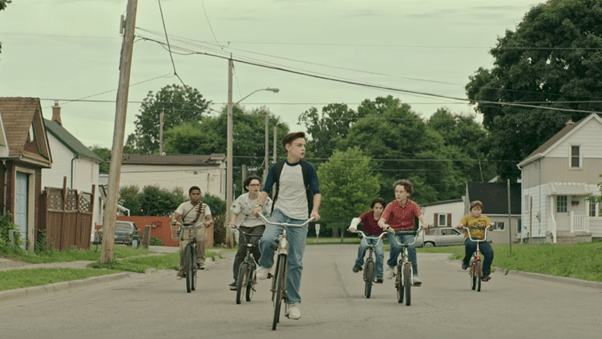
In contemporary horror, writers such as King and Kootnz explore locations close to suburban life as they implement evil where safety is expected, ‘when the ordinary is invaded by the terrifyingly extraordinary, horror happens’. The reader is then left to question the safety of their own home and environment. Therefore, writers can use location to blur the lines between reality and fiction.
Scientifically, location is an important element within the theory of ‘the survival of the fittest’. Early humans chose environments which they felt were safe and ensured their existence as dwellings ‘play an important role in creating order, meaning and stability in our lives’. When something starts to disturb that peace, we (as a species) begin to feel unsafe. And that is what horror writers count on:
‘Natural selection has favored individuals who gravitated toward environments containing the “right” physical and psychological features and avoided those which posed a threat. Places that contain a bad mix of these features induce unpleasant feelings of dread and fear, and therefore have become important ingredients of the settings for horror fiction and films’.
Our species has maintained this psychology over time as we still gravitate to physical surroundings that make us feel protected. Hence, when location is used to put the character in danger, biological instincts cause an emotional response, such as terror and anxiety, within the reader.
Sigmund Freud theorised the Uncanny as a key horror strategy ‘the familiar is defamiliarised, the stable destabilises’ to unsettle the reader’s realities and expectations. Therefore, location can be used as a character itself as it gives writers the opportunity to directly unbalance the equilibrium of the protagonist’s life.

For instance, abandoned locations often arise within this genre as it is uncanny for the nature of the environment. There is a sense of eeriness to a place that was once filled with people but, is now void of human life. Our species believe themselves to be advanced – the master of nature – thus, fear strikes when nature systematically reclaims what man made. Location can, therefore, be used in horror fiction to start societal conversations and destigmatise modern concepts.
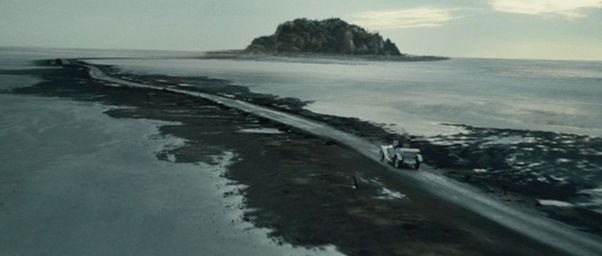
Location plays an important role in a plot as it is can be used as a device to move the action forward, ‘The spaces erupt and split, allowing in what one hoped to keep hidden, what we feared’. For example, in The Woman in Black the Causeway flooding at certain times traps Mr Kipps at Eel Marsh House allowing him to discover the secrets hidden within those four walls. Therefore, Hill’s choice of location provides her protagonist with a means to discover information.
Setting can be used metaphorically or symbolically. Closed doors, attics and basements can be a metaphor for the subconscious and forgetting our past. It can be the site for trauma or a way for the protagonist to be accessed by creepy neighbours. Or setting can be a way to challenge domesticity or act as the embodiment of evil. ‘Choosing the right setting is even more important for dark stories than for most other kinds of fiction’ as it can play whatever role the writer wants it to play. Which is why any location can be a horror setting if it is described as one. You may feel safe in your house but, when the moon casts peculiar shadows whilst the curtains no longer fall straight and the floorboards in the empty attic begin to creak… it doesn’t feel so safe.
WORD COUNT (exc. Quotes): 550
Bibliography (in order of use)
Wisker, Gina. Horror Fiction: An Introduction, Continuum, New York, 2005 (page 153)
Lamson, L. Now Write! Science Fiction, Fantasy and Horror: Speculative Genre Exercises from Today’s Best Writers and Teachers. 1st ed. New York: Penguin Random House. 2014 (page 137-138)
Gallagher, Stephen. “Shepherds’ Business” in New Fears, edited by Mark Morris, Titan Books, London, 2017 (page 29)
Castle, Mort. “Reality and the Waking Nightmare: Setting and Character in Horror Fiction” in On Writing Horror, edited by Mort Castle, Ohio: Writer’s Digest, 2007 (page 85)
McAndrew, Francis T. “The Psychology, Geography, and Architecture of Horror: How Places Creep Us Out” in Evolutionary Studies in Imaginative Culture, Vol. 4.1, ESIC 4.1. 2019 (Abstract) https://www.academicstudiespress.com/asp-blog/how-places-creep-us-out
McAndrew, Francis T. “The Psychology, Geography, and Architecture of Horror: How Places Creep Us Out” in Evolutionary Studies in Imaginative Culture, Vol. 4.1, ESIC 4.1. 2019 (Abstract) https://www.academicstudiespress.com/asp-blog/how-places-creep-us-out
Wisker, Gina. Horror Fiction: An Introduction, Continuum, New York, 2005 (page 146)
Wisker, Gina. Horror Fiction: An Introduction, Continuum, New York, 2005 (page 152)
Hill, Susan. The Woman in Black, London: Vintage, 1998
Hall, Rayne. “Writing Dark Stories”, Scimitar Press, 2014 (page 53)
 Frightmare Fiction